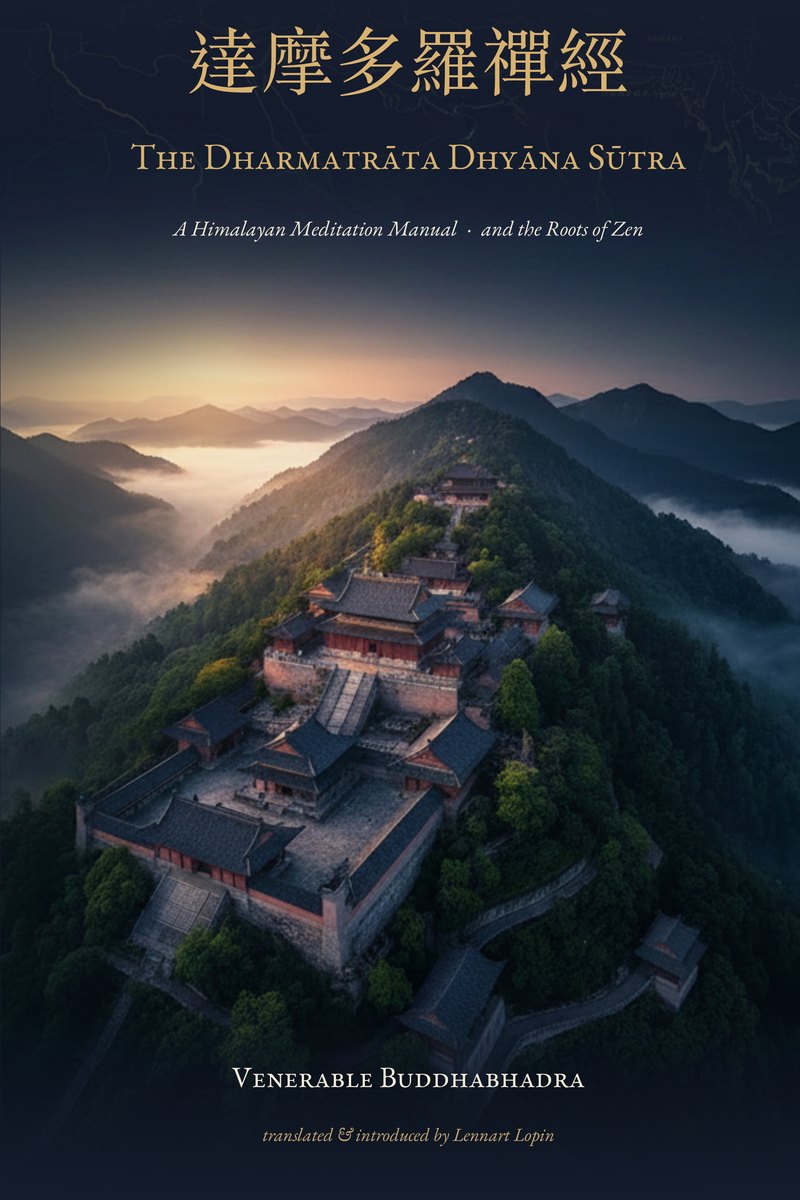
The Meditation Manuals
The Dharmatrāta Dhyāna Sūtra
A Himalayan meditation manual — and the roots of Zen
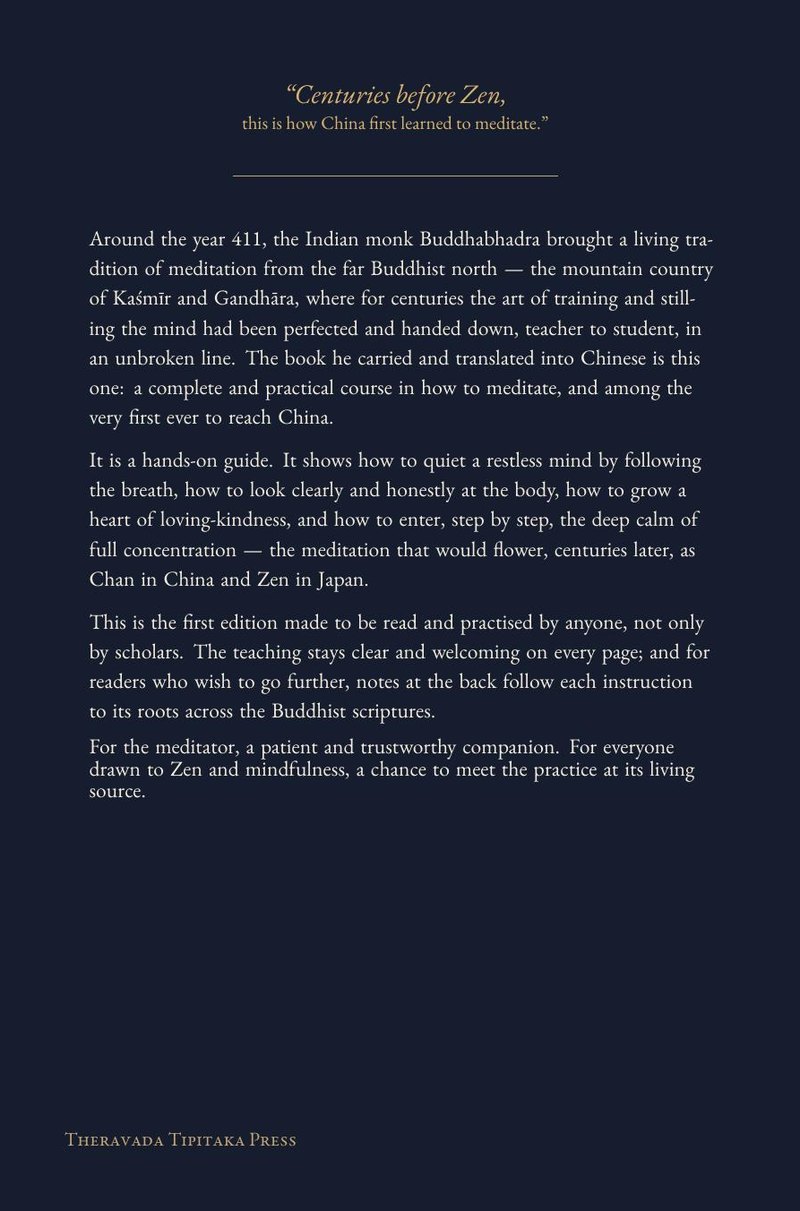
“Centuries before Zen, this is how China first learned to meditate.”
Around the year 411, the Indian monk Buddhabhadra brought a living tradition of meditation from the far Buddhist north — the mountain country of Kaśmīr and Gandhāra, where for centuries the art of training and stilling the mind had been perfected and handed down, teacher to student, in an unbroken line. The book he carried and translated into Chinese is this one: a complete and practical course in how to meditate, and among the very first ever to reach China.
It is a hands-on guide. It shows how to quiet a restless mind by following the breath, how to look clearly and honestly at the body, how to grow a heart of loving-kindness, and how to enter, step by step, the deep calm of full concentration — the meditation that would flower, centuries later, as Chan in China and Zen in Japan.
This is the first edition made to be read and practised by anyone, not only by scholars. The teaching stays clear and welcoming on every page; and for readers who wish to go further, notes at the back follow each instruction to its roots across the Buddhist scriptures.
For the meditator, a patient and trustworthy companion. For everyone drawn to Zen and mindfulness, a chance to meet the practice at its living source.
From the book